
On the morning of April 22, Professor Andrea D'Ariano from Roma Tre University in Italy delivered an academic lecture titled Train Scheduling Optimization with Consideration of Passenger Flows During Disturbed Operations in Conference Room 8A509 of the Modern Transportation Engineering Center. The lecture was chaired by Professor Pan Hanchuan from School of Urban Railway Transportation.
At the beginning of the lecture, Professor Pan Hanchuan warmly introduced Professor Andrea D'Ariano, encouraging everyone to listen attentively, gain valuable insights, and actively engage in discussions on relevant academic topics after the session.

During the lecture, Professor Andrea D'Ariano pointed out that optimization models for railway transportation management aim to determine real-time control measures to mitigate the impact of operational disruptions. This field primarily involves two research directions. On one hand, train scheduling models integrate all relevant operational conditions to ensure the feasibility and efficiency of railway services while maintaining punctuality as much as possible. On the other hand, delay management models focus on the impact of rescheduling decisions on passenger service quality. Conflicts arise between these two objectives when reducing train delays requires canceling certain connecting services, leading to additional waiting times for transferring passengers. In such cases, infrastructure managers and railway operators must negotiate strategies for retaining or canceling connecting services. Professor Andrea D'Ariano discussed a hybrid railway traffic optimization approach that combines the two research methods. First, a dual-objective optimization model was constructed to simultaneously minimize train delays and the number of missed passenger connections. Second, an integrated mathematical model was developed, incorporating micro-level operational rules and passenger route reselection strategies. Finally, using game theory methods, he analyzed the Nash equilibrium strategies of infrastructure managers and passenger groups. Based on case study results from the conventional railway network in the Netherlands, he quantitatively analyzed the trade-off between minimizing train delays and minimizing passenger travel times.
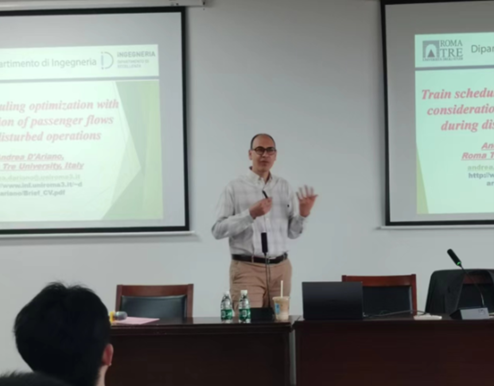

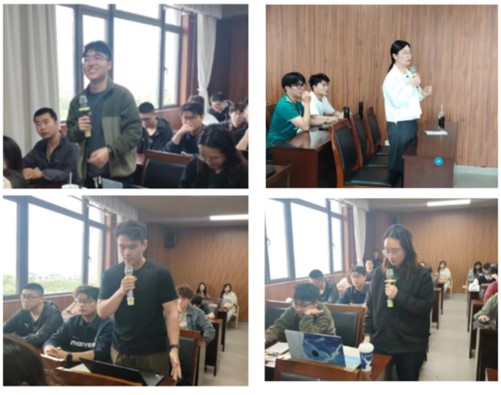
After the lecture, Professor Andrea D'Ariano engaged in in-depth interactions with the attending faculty and students. Participants actively discussed issues related to operational management optimization with him. The atmosphere was lively, and all attendees listened attentively, further broadening their academic horizons.
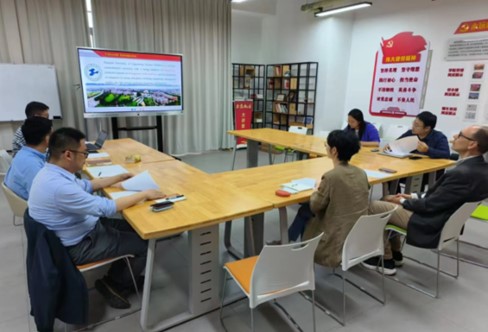
In the afternoon, Professor Andrea D'Ariano held an exchange seminar with Deputy Party Committee Secretary Sheng Zhiheng, Assistant Dean Huang Yuanchun, and faculty members Pan Hanchuan, Zhong Shuoqiao, and Zheng Xun in Conference Room 8A513 of the Modern Transportation Engineering Center. Both sides briefly introduced the development history and current status of their respective colleges, followed by detailed discussions on potential collaboration in areas such as international student training, teaching, and research. They unanimously agreed on the potential for cooperation in internationalization, talent cultivation, and scientific research, aiming to establish sustainable and regular communication and collaboration mechanisms to create more international educational and exchange opportunities for faculty and students from both institutions, thereby further advancing their partnership.
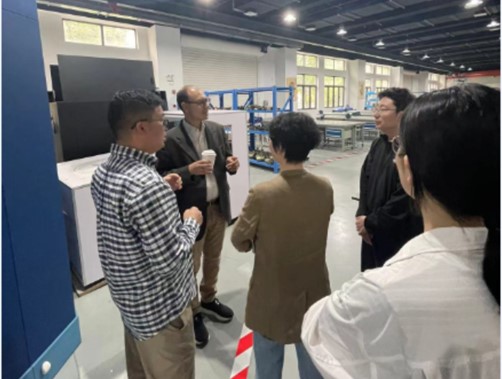
During his visit, Professor Andrea D'Ariano also toured the relevant laboratories of School of Urban Railway Transportation to gain an in-depth understanding of the college’s teaching and research activities.
Andrea D'Ariano is a professor in the Department of Civil Engineering, Computer Science, and Aerospace Technologies at Roma Tre University. He has served as an expert and reporter for the European Commission and various national research funds. He is the coordinator of the Optimization of Public Transport and Shared Mobility section of the Italian Association for Operations Research (AIRO) and serves as an associate editor for several internationally renowned journals (such as Transportation Research Parts B, C, and E) and academic conferences (e.g., the IEEE International Conference on Intelligent Transportation Systems). His primary research focuses on the design and development of scheduling and routing algorithms, with applications widely used in public transportation and logistics.