
To further promote technical cooperation and academic exchange among young scholars and graduate students in the field of urban rail transit and to share high-quality educational resources, the 2025 Transport Optimization and Safety Academic Forum, organized bySchool of Urban Railway Transportation at Shanghai University of Engineering Science, was successfully held at our university on August 28. The forum brought together over 60 participants, including senior experts, young scholars, and graduate students from prestigious domestic and international institutions such as Roma Tre University (Italy), Technische Universität Dresden (Germany), The Hong Kong Polytechnic University, Hefei University of Technology, and Nanjing University of Aeronautics and Astronautics. They participated in a hybrid format combining online and offline attendance. Vice Dean Wang Lei and Assistant Dean Huang Yuanchun of School of Urban Railway Transportation, along with full-time faculty members Pan Hanchuan, Zhuang Yifan, Li Sijie, Wang Fangsheng, and student representatives, attended the event.
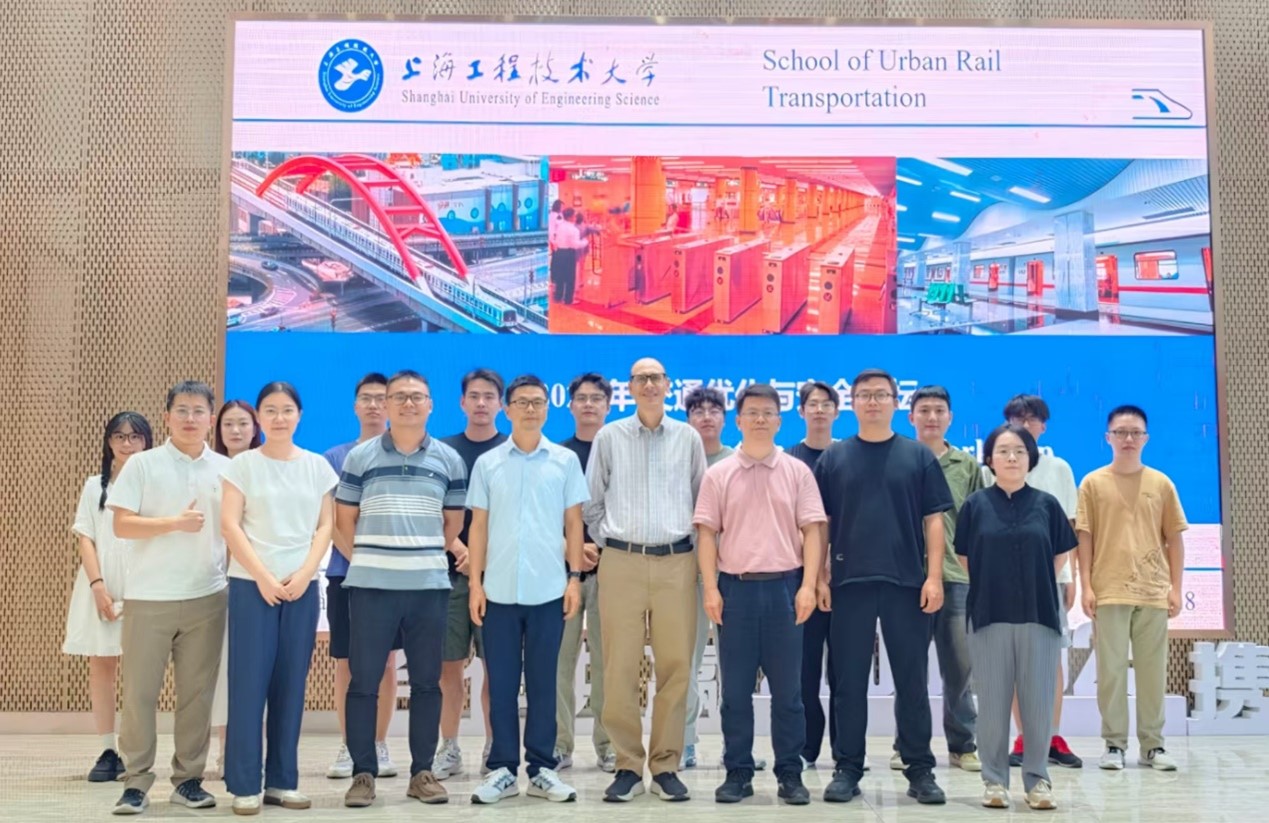
At the beginning of the forum, Professor Pan Hanchuan from the college extended a warm welcome to all guests and briefly introduced the forum's background. Professor Andrea D'Ariano from Roma Tre University, serving as the forum chair, delivered an academic report titled A Bilevel Rescheduling Framework for Optimal Inter-Area Train Coordination. Professor Andrea outlined the challenges faced by railway dispatchers in real-time scheduling, noting that independent decision-making across different dispatch areas often impacts the overall feasibility and efficiency of train operations. He emphasized the critical role of regional dispatch centers in cross-area coordination and proposed a bilevel optimization rescheduling framework. The study employs a branch-and-bound method to solve the coordination problem, with its algorithm performance validated using a real-world case from a large Dutch railway network. The results demonstrate that this method can achieve optimal or near-optimal coordinated scheduling solutions within practical operational timeframes, offering new insights for improving the efficiency and stability of cross-area railway operation management.


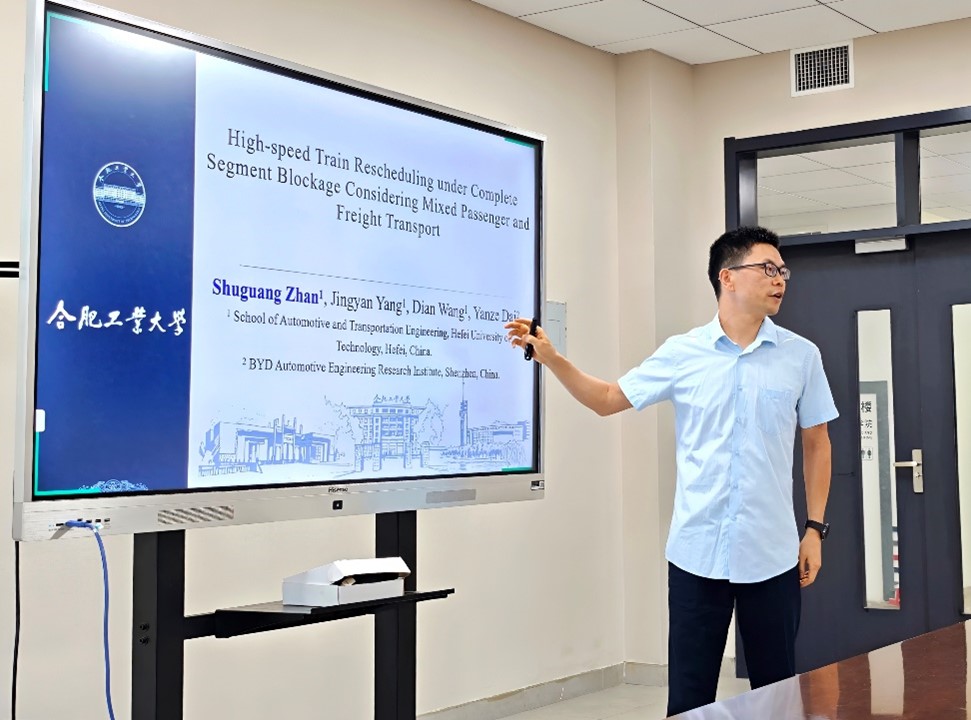
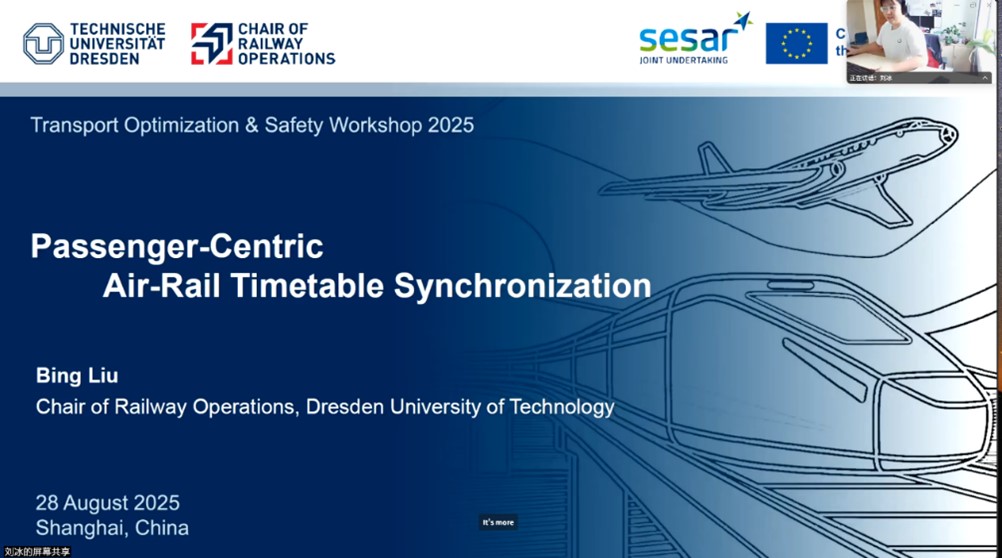
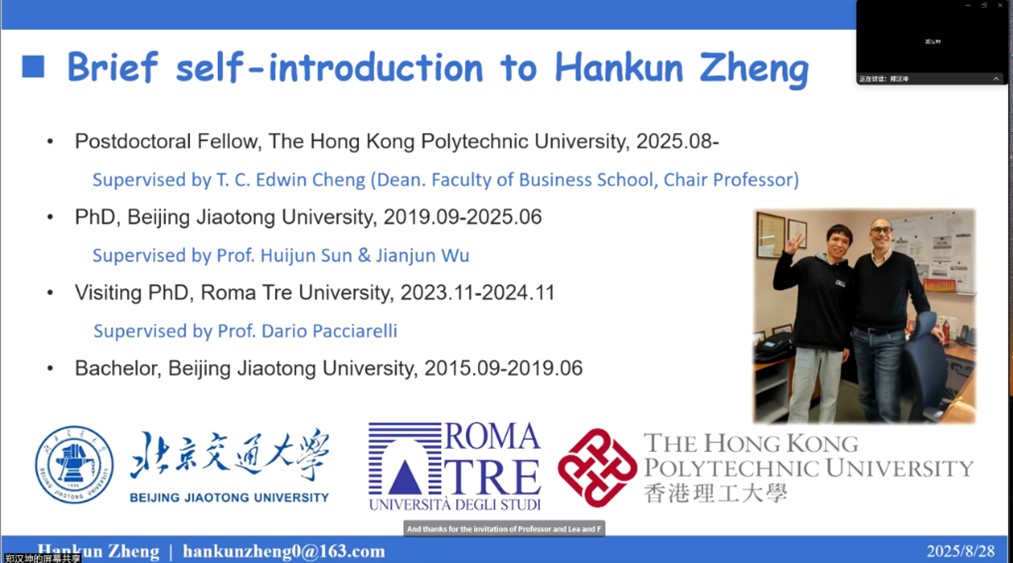
Professor Zhan Shuguang from Hefei University of Technology presented on High-speed Train Rescheduling under Complete Segment Blockage Considering Mixed Passenger and Freight Transport, discussing real-time rescheduling methods for mixed passenger and freight trains under complete segment blockage scenarios. Associate Professor Mo Pengli from Nanjing University of Aeronautics and Astronautics, in his report titled Subsidy Allocation Problem with Bus Frequency Setting Game: A Tri-level Formulation and Exact Algorithm, proposed a tri-level optimization model based on game theory, revealing the impact of subsidy allocation and bus competition on social costs. Associate Professor Li Sijie from our college delivered a report titled Coordinated Optimization of Train Skip-Stopping and Passenger Flow Control in Urban Rail Transit Considering Passenger Travel Behavior, introducing a coordinated method that integrates skip-stop optimization and passenger flow control, with its application effectiveness validated using a reinforcement learning algorithm on Shanghai Metro Line 9. Dr. Liu Bing from Technische Universität Dresden focused on Passenger-Centric Air-Rail Timetable Synchronization, proposing a passenger-centric optimization method for synchronizing air-rail timetables and verifying its effectiveness using a case study from the Spanish air-rail network. Dr. Zheng Hankun from The Hong Kong Polytechnic University discussed Multiperiod Alternative Service Optimization Responding to Joint Disruptions in Multimodal Transit Systems, studying response strategies for joint disruptions in multimodal transit systems and proposing a multiperiod alternative service optimization model, which was validated using a case study from Beijing.
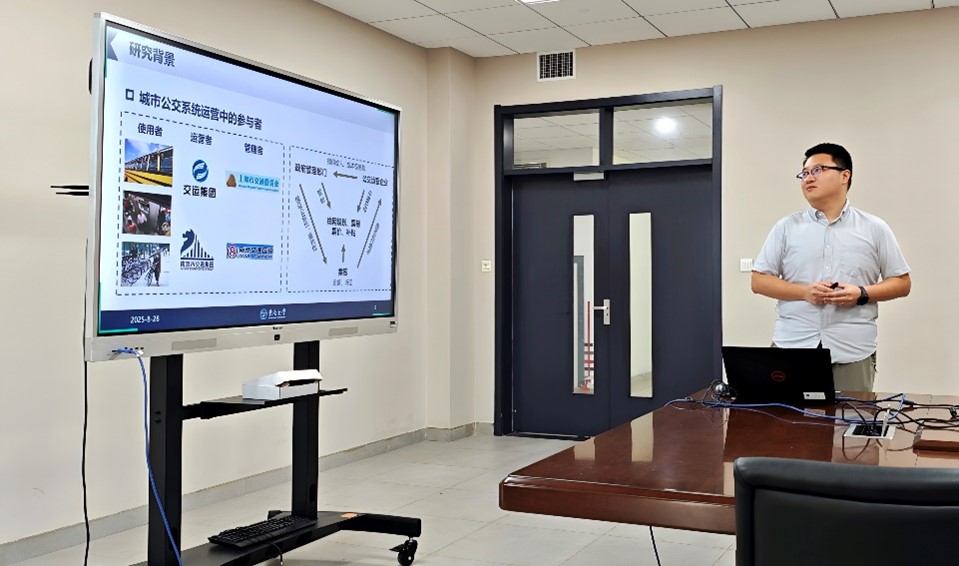
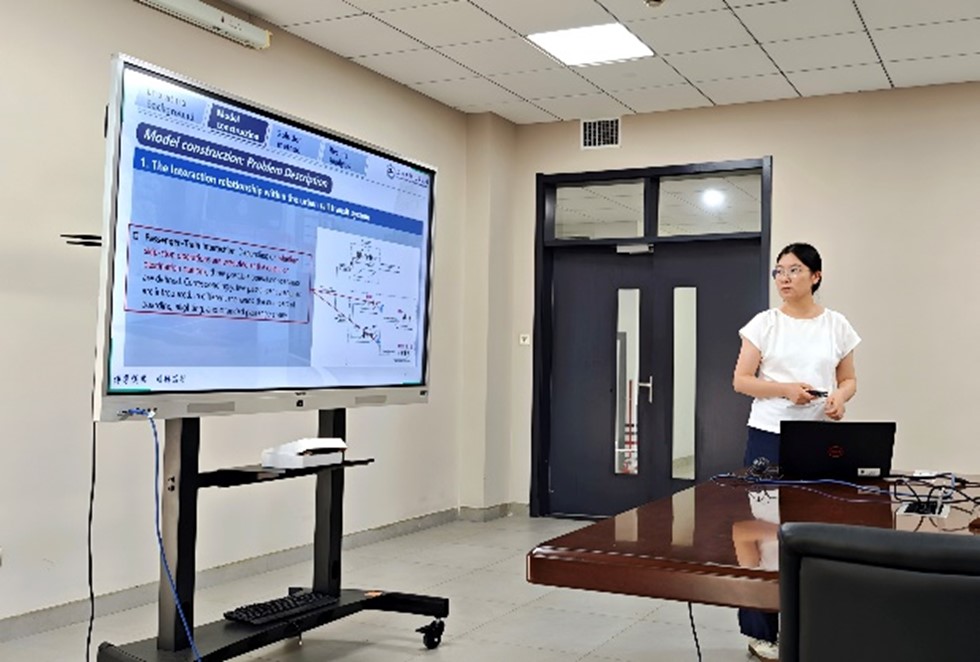
The forum featured a total of nine academic reports, covering cutting-edge topics such as train rescheduling, cross-area coordination, mixed passenger and freight transport, subsidy allocation, passenger flow management, air-rail intermodal transport, and multimodal transit emergency optimization. These presentations collectively showcased the latest research advances and practical achievements in the fields of rail transit and urban transportation. Experts engaged in in-depth discussions around related themes, fully reflecting the innovative trend of interdisciplinary integration and industry-academia collaboration. The forum not only provided a high-level, multi-perspective academic exchange platform for young scholars and graduate students but also fostered idea exchange and collaborative communication among different research teams. It holds positive significance for broadening academic horizons, enhancing research capabilities, and stimulating innovative thinking.