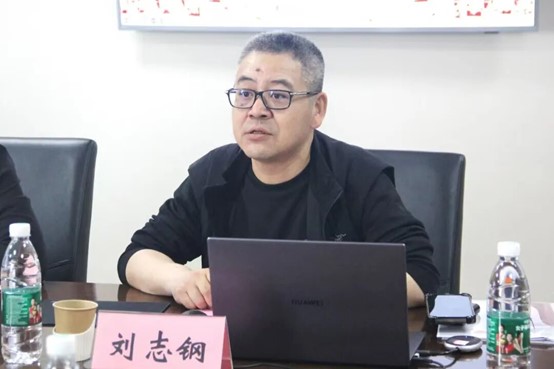
On the afternoon of April 8, School of Urban Railway Transportation at Shanghai University of Engineering Science held an exchange seminar with the Shanghai Rail Transit Training Center Conference Room 8A521 of the Modern Transportation Engineering Center. The meeting was chaired by Liu Zhigang, Dean of School of Urban Railway Transportation.
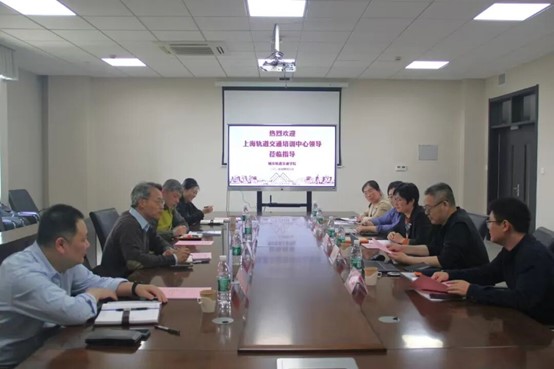
On behalf of the College Party Committee, Wan Huilin, Party Secretary of School of Urban Railway Transportation, expressed gratitude for the long-term support provided by the Training Center to the college. She emphasized that Party-building collaboration serves as a key driver for promoting university-enterprise cooperation. The college should further strengthen the integration of ideological and political education into the entire teaching process and jointly build an ideological and political education system with enterprises. Both sides should deepen their cooperation, promote operational integration, and cultivate more high-quality application-oriented talents for the rail transit industry.

Liu Zhigang, Dean of School of Urban Railway Transportation, provided a detailed overview of the college's profile, faculty development, education and teaching practices, scientific research, and talent cultivation efforts. He mentioned that the college has been approved this year as a pilot college for reforming the talent cultivation model of application-oriented undergraduate universities in Shanghai. Moving forward, the college will continue to deepen the integration of industry and education, develop a curriculum system that integrates majors and micro-degrees, enhance students' practical training through innovative cultivation models, and further upgrade the collaborative education mechanism between the university and enterprises.
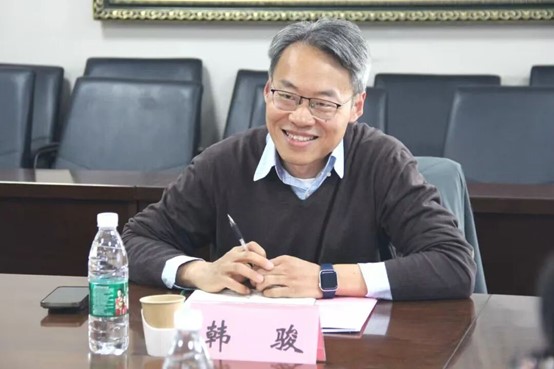
Han Jun, Party Secretary and Director of the Shanghai Rail Transit Training Center, pointed out that both sides should strengthen exchanges in teaching and scientific research, promote the sharing of student internship and training resources, and facilitate the transformation and application of research achievements. He emphasized that the cultivation of application-oriented talents requires practical training during internships, helping students transition from theoretical principles to practical skills, stimulating their learning initiative, and laying a solid foundation for their comprehensive development in the future.
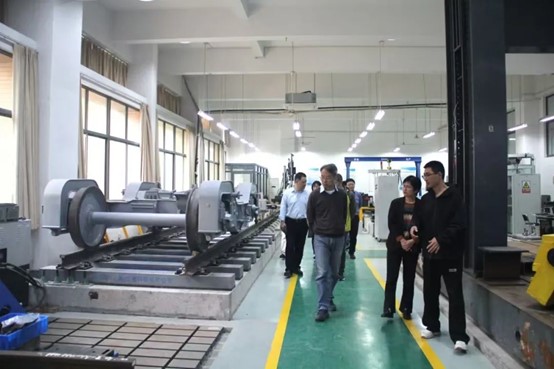
After the meeting, leaders from the Shanghai Rail Transit Training Center, accompanied by the college's leadership team, visited the college’s Rail Rolling Contact Friction, Wear, and Fatigue Laboratory (CMA), the Urban Rail Transit Signaling System Training Laboratory, and the Rail Transit Train Dispatcher Skills Laboratory.